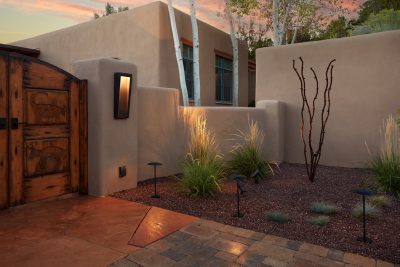
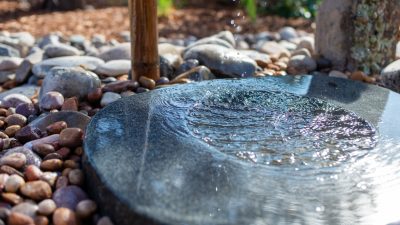
Gravel for Landscaping: Key Takeaways
- Gravel landscaping reduces water use, lowers maintenance, helps water drain more effectively, and creates a more natural look in Santa Fe gardens
- Different gravel types, like pea gravel, crushed stone, and decomposed granite help build various designs
- You can use gravel to transform front yards, build pathways, create patios, and design dry creek beds
- Proper installation and maintenance ensure long-term performance of your landscape
Gravel may not look like much at first, but in Santa Fe yards, it can quickly turn a high-maintenance space into something far simpler to manage.
If you’re considering gravel for landscaping, this is what you should know:
- The different types of gravel you can choose from
- Why gravel for landscaping works so well in dry climates
- Practical ways to use it in your front yard
- What it typically costs and how to plan your project
- What installation actually involves
- How to keep it looking clean over time
Types of Gravel for Landscaping
You’ve likely seen gravel used in Santa Fe gardens before, and at a glance, it can all start to look the same.
But once you move closer, different gravel types create very different looks.
Pea Gravel
Think small, smooth, rounded stones, the kind that feel comfortable to walk on.
Like the small stones from the Hansel and Gretel story, used to mark the path home in the Brothers Grimm tale. Remember the story?
Pea gravel is usually about 1/4 inch in size. It feels soft underfoot and adds a relaxed, romantic touch to your Santa Fe garden, patio or play area.
Crushed Stone
Crushed gravel for landscaping has jagged edges that lock together, creating a firm and stable surface. It works a bit like puzzle pieces fitting tightly together.
If you’re building a driveway or a path you’re using frequently from your front yard to your backyard, crushed stone will stay in place even with constant foot traffic.
Decomposed Granite
Imagine a small outdoor seating area with a compacted granite base, surrounded by Big Sage and low stone walls.
Clean, minimal, and very Santa Fe, this landscape is possible with decomposed granite that packs down firmly, creating a smooth, natural-looking surface.
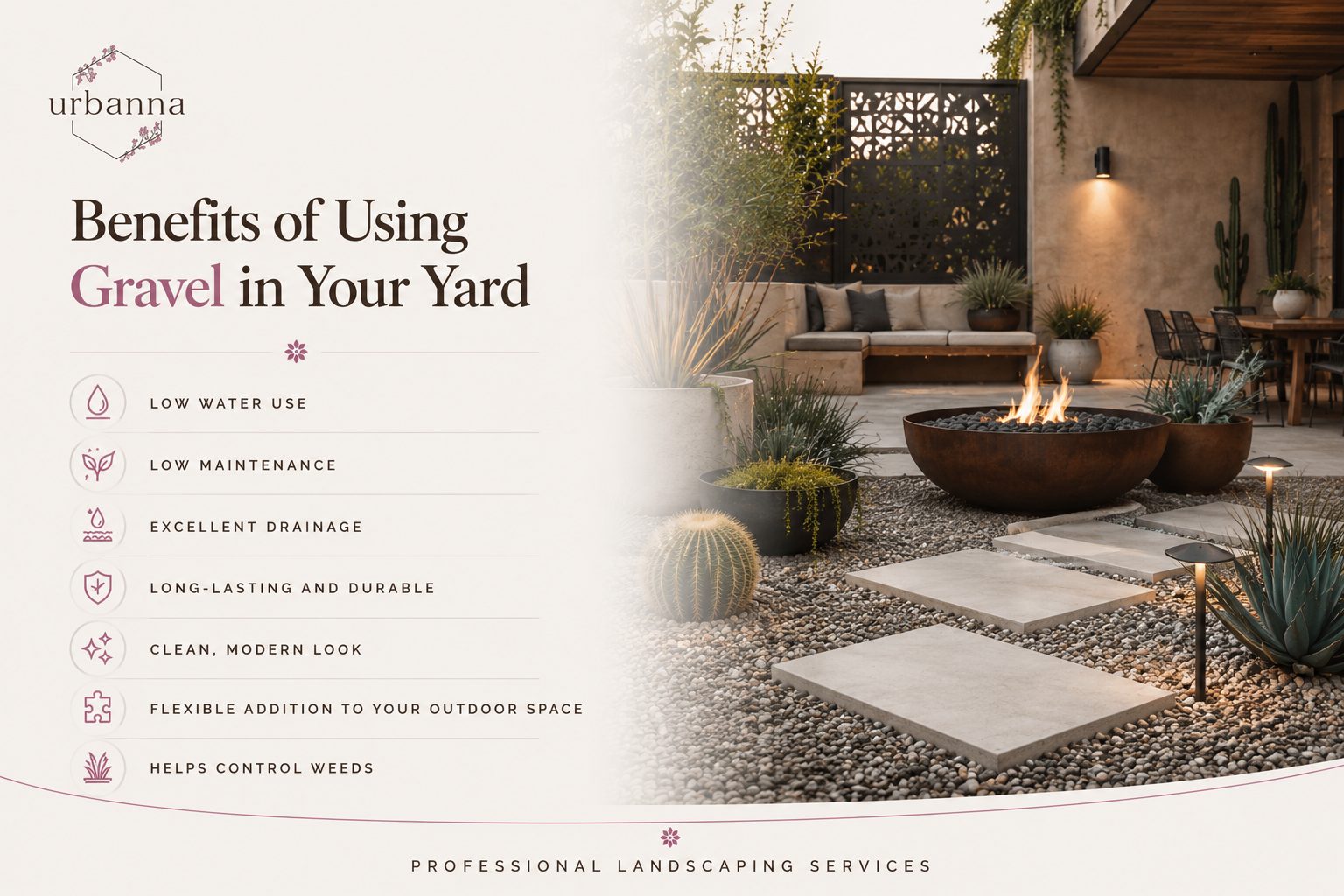
Benefits of Using Gravel in Your Yard
Beyond the visual impact, gravel also helps solve common landscaping challenges in Santa Fe.
Low Maintenance
Unlike organic mulch, lava rocks do not decompose. You won’t need to replace them every season, which saves both time and money.
Low Water Use
In a region where water conservation matters, gravel helps you reduce the need for irrigation.
Instead of struggling to maintain a lush lawn, you can create a beautiful yard that thrives with minimal watering, cutting water use – and your bill.
Low Maintenance
Imagine having long, relaxing weekends without the time-consuming mowing, fertilizing, reseeding, and constant watering.
More time to yourself, with only occasional raking to keep the surface even, light weeding a few times a season and some minor touch-ups every few years to keep that clean, finished look you got the first time.
Excellent Drainage
No more puddles or runoff Issues. Gravel allows water to flow through your yard or garden naturally, which helps prevent mud and erosion.
This is especially useful for sloped yards, areas near downspouts, and spaces where water is collected.
Long-Lasting and Durable
Unlike organic mulch, which breaks down and requires periodic replacement, gravel keeps its shape and color for years.
It also withstands strong sun, temperature swings, wind, and occasional heavy rain.
Clean, Modern Look
Gravel naturally complements Santa Fe’s adobe architecture and the desert landscape. Its different colors and shapes create contrast, define spaces, and add texture without overwhelming your design.
- Light-colored gravel brightens shaded areas
- Darker tones create eye-catching contrast
- Mixed sizes add depth to your garden
Flexible Addition to Your Outdoor Space
Gravel works in almost any part of your yard. You can define pathways, create patios, highlight plant beds, build dry creek features, or separate functional zones.
It also adapts to different styles, from rustic to modern.
Combined with flagstone or steel edging, it creates an impressive, geometric layout or a more loosely for a natural, flowing design.
Helps Control Weeds
Pair gravel with a weed barrier and proper depth, and you’ll receive a landscape that significantly reduces weed growth.
Garden Ideas With Gravel for Different Areas
So how can you actually use gravel in your outdoor space? Let’s explore a few ideas you can bring to life.
Front Yard Desert Welcome
Use gravel with sculptural plants and natural stone to create a front yard that feels inviting the moment you arrive.
Lay a base of warm, sandy-toned gravel, then add clusters of Big Sage and Agastache.
A few large boulders will serve as focal points and space everything out so each element has room to breathe.
Meandering Garden Pathway
Gravel pathways create movement, gently guiding you through your outdoor space.
Make a winding path with fine gravel. Border it with steel or natural stone edging and let it curve naturally through planting beds.
Fill the space with ornamental grasses and low shrubs, then enjoy the soft crunch underfoot and the view of your path gently winding through the landscape, inviting you to keep exploring.
Gravel Patio Retreat
Turn a simple area into a relaxing outdoor living space with a cozy gravel patio.
Form a smooth, level base for a seating area using decomposed gravel. Add a fireplace in the center, two or three comfortable chairs, and native plants like delicate Winterfat and flowering Agastache.
As the sun sets, enjoy how the gravel reflects warm tones of light, inviting you to stay outside just a little longer.
Cost of Gravel and Installation
Gravel is one of the most budget-friendly ways to transform your outdoor space, especially compared to concrete or full hardscaping projects.
It typically costs between $25 to $90 per ton, plus delivery charges.
Of course, the final cost depends on the size of your yard, the type of gravel you choose, and how the area is prepared.
Material costs can vary, with crushed stone or pea gravel typically being more affordable. Decorative choices tend to cost more.
Installation costs depend on the level of work.
A simple pathway can be relatively low-cost as it may only require light excavation and a single layer of landscaping gravel. A full yard design, including design, grading, a weed barrier, base layers, and proper edging to keep everything in place, can range into the thousands.
How To Install Gravel for Landscaping
Proper installation ensures gravel design remains clean and lasting.
- Remove grass, weeds, and debris.
- Level the surface.
- Lay high-quality landscape fabric to reduce weed growth.
- Use compacted crushed stone for stability.
- Spread the gravel type you’ve chosen at 2–4 inches depth.
- Compact the surface.
- Install edging to keep gravel contained.
Maintenance Tips for Gravel Landscapes
To keep your gravel looking its best:
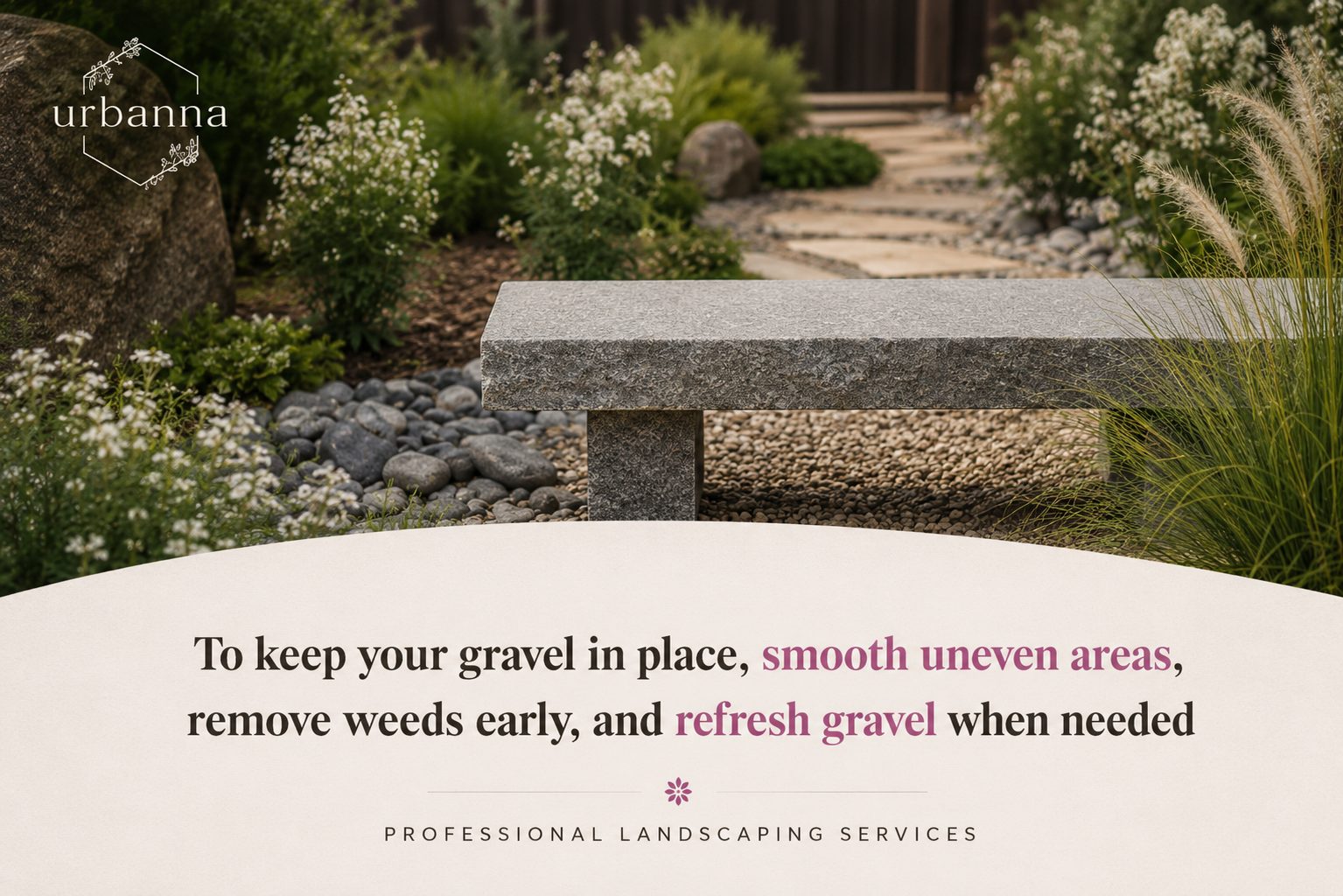
- Smooth out uneven areas and redistribute gravel occasionally.
- Pull weeds before they spread through the fabric.
- Add a new layer every few years to maintain depth and color.
- Keep borders secure to prevent gravel from spreading into unwanted areas.
Create a Gravel Landscape With Urbanna Landscaping
Using gravel for landscaping in your Santa Fe garden looks simple, but certain tasks like material selection and grading may be challenging if you’ve not done it before.
Urbanna Landscaping offers various landscaping services, including gravel design and installation, helping you create an outdoor space that fits perfectly with Santa Fe’s natural beauty and needs very little upkeep.
We can help you create pathways and patios as well as fully transform your yard, handling every step of the process.
Gravel for Landscaping: FAQs
Is gravel good for Santa Fe landscapes?
Gravel is a great option for Santa Fe’s dry climate because it reduces water use and handles heat and sun exposure with ease. It also works well with native plants, creating a natural, low-maintenance outdoor space.
Does gravel get hot?
Gravel for landscaping can get warm in direct sunlight, with darker tones absorbing more heat. If your space gets a lot of sun, choose lighter-colored gravel to keep surfaces cooler and more comfortable.
Do I need a weed barrier?
A weed barrier helps prevent unwanted growth and keeps your gravel for landscaping looking clean. It also adds stability by separating the gravel from the soil underneath.
How deep should gravel for landscaping be?
The typical depth for gravel is 2–4 inches but depth may vary depending on your design. Paths and patios may need a compacted base layer underneath to ensure stability and long-term durability.

- Landscape Lighting Cost: Price Breakdown and Budgeting Tips - July 28, 2026
- Gravel for Landscaping: Smart Ideas for Santa Fe Homes - May 27, 2026
- Garden Focal Points: How to Design a More Engaging Landscape - May 27, 2026