
Garden Focal Points: Key Takeaways
- Garden focal points draw attention, help organize your garden, create a sense of flow, and add character
- Different types of focal points like plants, water features, and structures engage the senses and bring your garden to life
- Match the focal point in a garden with the size, style, and layout of your space
- Strategic placement and framing enhance the visual impact of your garden focal points
- Avoid common mistakes like poor scale and overcrowding to keep your design balanced and effective
Some gardens pull you in instantly. Usually, it’s a single feature that quietly steals the spotlight, giving your space a clear visual anchor.
In this guide, you’ll discover what garden focal points are, why they matter, the types you can use, and how to position them. Plus, common mistakes to avoid.
Garden Focal Points Explained
In simple terms, garden focal points are the elements your eyes land on first, intentionally or not.
Think a sculptural tree with twisting branches, a bubbling stone fountain, or even a brightly colored bench tucked among greenery.
Your garden’s plants, pathways, and textures support and frame that central feature.
The Importance of Focal Points in Landscape Design
A strong focal point draws attention immediately and helps structure the space.
It gives your eye a clear place to land, while also bringing structure to the overall layout. At the same time, it adds character and helps define the mood of the space.
Garden focal points also highlight key features naturally and make the garden feel larger and more layered.
For example, in a small backyard, even a single statement tree can completely change how the space feels.
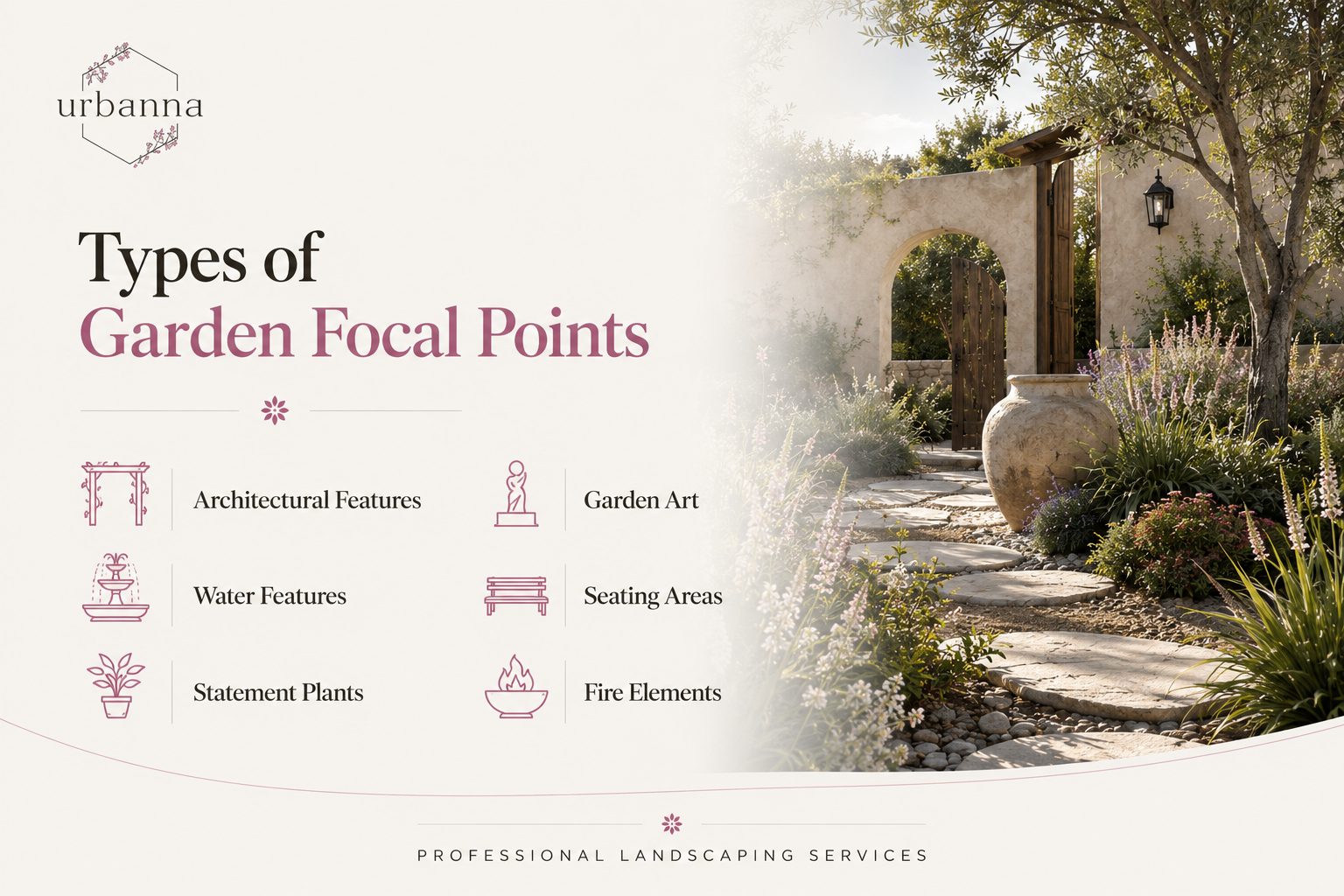
Types of Garden Focal Points
The best garden focal points go beyond visuals and influence how you experience the space.
Architectural Features
A wooden pergola covered in climbing roses can completely change how a space feels the moment you step into it.
You can also get the same effect with a hidden, romantic seating area next to a flagstone patio.
These structures act like gateways, adding a sense of discovery as you move through the space.
Water Features
Even before you see it, the sound of running water changes the atmosphere. It creates movement and masks unwanted noise so you can relax and dream away.
Statement Plants
Feel the quiet strength of that single olive tree standing apart from the rest or of the waves of ornamental grasses like Blue Grama swaying in the wind.
These living elements add texture and movement so your garden feels organic and alive.
Garden Art
A metal sculpture catching the sunlight or a stone statue standing against the greenery: this striking picture introduces contrast and tells a story.
Seating Areas
A simple bench placed at the end of a winding path invites you to stop, creating a quieter, more relaxed atmosphere.
It helps the space feel more personal and grounded.
Fire Elements
Imagine the soft glow of an outdoor fireplace acting as the heart of your garden.
The flicker of flames draws your family and guests in naturally, bringing a warm, dynamic feel to the space.
Pathway Endings
Paths naturally guide attention toward garden focal points. It could be a sculpture, a tree, a water feature, or a retaining wall with cascades of blooms and grass.
These garden focal points give direction and make your outdoor journey exciting and complete.
How To Choose the Right Focal Point
Choosing the right focal point comes down to balance, but also a bit of restraint.
- Consider the size of your garden. A small ornament will get lost in a large yard, while an oversized structure can overwhelm a compact space.
- Think about style. Your focal point should complement your home and garden theme. For example, a metal sculpture might feel out of place in a cottage-style garden filled with soft blooms.
- Make it visible from key viewpoints: a patio, window, or entry path.
- Aim for contrast, using color, shape, or texture, so your garden focal point stands out against the surroundings.

Placement Tips for Maximum Visual Impact
Even a strong focal point won’t work if it’s poorly positioned.
- Position your focal point where it naturally draws the eye.
- Use framing techniques, surrounding it with plants, hedges, or borders.
- Layer your design, using supporting elements like mid-height plants, ground cover, and background textures that create depth.
- Use lighting, so your garden focal point extends its impact beyond daylight hours.
Common Mistakes To Avoid
A few missteps can weaken the overall effect of your work, so try to avoid them.
Too Many Focal Points
Too many focal points is one of the quickest ways to make a garden feel cluttered. It’s easy to overdo it here, especially in smaller spaces.
Limit your design to one main focal point and a few subtle supporting elements.
Poor Scale Choices
A focal point that’s too large or too small can feel out of place in the garden.
Choose a size that fits the proportions of your space and surrounding features.
Lack of Contrast
If your focal point blends in too much, it won’t draw attention.
Use elements of different heights or forms to help them stand out.
Weak Placement
A focal point placed off to the side or hidden can easily go unnoticed.
Position it where the eye naturally travels, such as along a path or central view.
No Connection to the Design
A focal point that doesn’t match the garden’s style can feel disconnected.
Select elements that complement the overall look and feel of your space.
Create Impressive Garden Focal Points With Urbanna Landscaping
Designing garden focal points may seem simple, but you may run into unexpected issues if you don’t have hands-on experience.
Urbanna Landscaping offers professional landscape services in Santa Fe, helping you plan and place garden focal points that fit naturally within your space.
Our friendly team will help you choose a single feature or transform your entire yard, guiding you through every step, from concept to final layout.
Garden Focal Points: FAQ
What is the best focal point in a garden?
There’s no single “best” option; your choice depends on your space and overall style. Popular options include water features, specimen trees, and architectural elements like pergolas.
Can I build a focal point if my garden is small?
Absolutely. Small spaces benefit greatly from garden focal points, as they create structure and make the area feel more intentional.
How many focal points should I have in my garden?
Most gardens work best with one primary focal point and possibly one or two secondary ones, depending on size.
Are garden focal points expensive?
You don’t need expensive ideas to attract attention. Use a well-placed plant, a painted bench, or a DIY feature to make your outdoor space striking and inviting.
How do I make my focal point stand out?
Use contrast, thoughtful placement, and subtle framing with surrounding plants to highlight it naturally.

- Yard Drainage Solutions: How To Fix Standing Water and Runoff - October 15, 2026
- Drip Irrigation Systems: A Santa Fe Installation, Design & Maintenance Guide - October 15, 2026
- Landscape Lighting Cost: Price Breakdown and Budgeting Tips - July 28, 2026