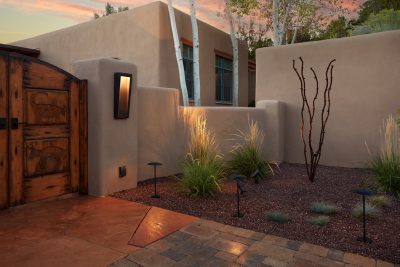
How To Place Rocks on a Slope To Stop Erosion: Key Takeaways
- Follow a step-by-step process to arrange rocks for erosion control
- Choose the right rocks based on your slope steepness, soil type, and water runoff
- Drainage solutions like dry creek beds and terraces help control water flow and prevent soil from washing away
- Combining erosion rocks with native plants improves slope stability
- Inspect your landscape after storms, reinforce weak areas, and remove sediment to keep your erosion control system effective
Every year, erosion causes billions of dollars in property damage across the United States.
In places like Santa Fe, the risk is even higher due to short, intense rainstorms and sloped terrain.
If you’ve noticed your yard shifting, you can still fix it.
In this guide, you’ll learn:
- How to place rocks on a slope to stop erosion
- Which types of rocks work best for erosion control
- How rock and gravel systems reduce soil loss and stabilize your slope
- Practical ways to reshape your slope and guide water where it should go
- Simple maintenance steps to keep your system working long-term
How To Place Rocks on a Slope To Stop Erosion
If you’ve ever watched soil wash downhill after a storm, you’re probably already wondering how to place rocks on a slope to stop erosion in a way that actually works.
What works is a step-by-step approach. The goal is simple: stabilize the soil and control how water moves across the slope.
1. Grade and Prepare the Slope
A common mistake is focusing only on the rocks themselves. In reality, most failures happen because the base underneath wasn’t properly prepared.
Start with clearing: Loose soil, debris, and unstable vegetation need to go. If the incline is too steep, small adjustments like shallow steps or breaks can make a big difference in slowing runoff.
2. Install Landscape Fabric
Once you’ve prepped the surface, lay down a permeable landscape fabric and pin it securely.
This layer acts as a barrier, keeping soil from mixing into the rock while still allowing water to pass through.
3. Dig Anchor Trenches
At the top and bottom of the slope, make shallow anchor trenches. Without them, even a well-built layer can slowly shift over time.
4. Add a Stable Base Layer
This is where the foundation really takes shape. Spread a two-to-four–inch layer of crushed stone or decomposed granite to create the stability the system needs.
5. Place Rocks From the Bottom Up
Working from the bottom up gives support for each layer, which helps prevent the entire system from gradually sliding downhill.
6. Use Larger Rocks as Anchors
Larger rocks or boulders placed here and there act like anchors, breaking up water flow and keeping smaller material from shifting.
7. Make Drainage Paths
Instead of letting water carve its own path, guide it. A dry creek bed with river rock gives runoff a controlled route down the slope.
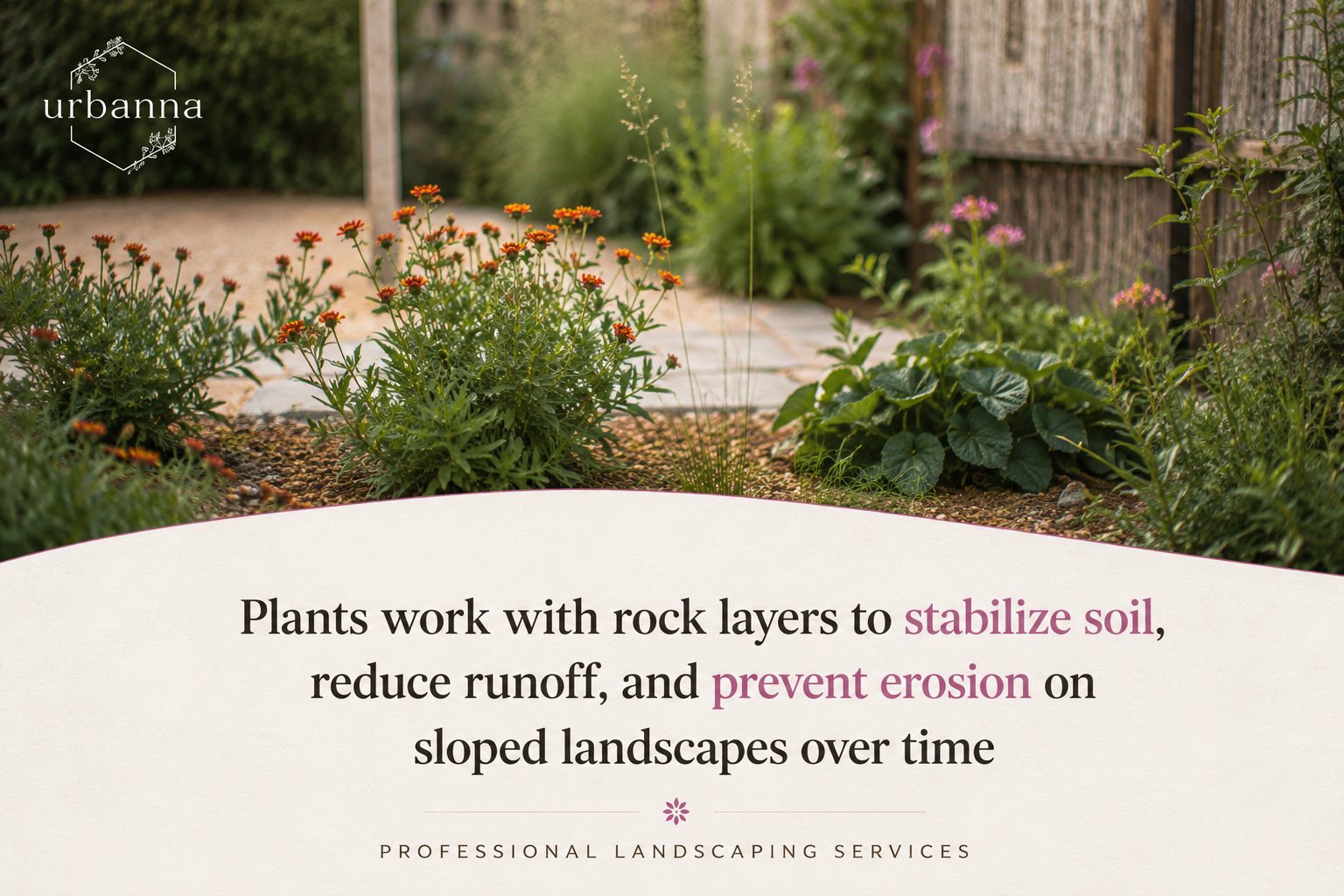
8. Reinforce With Plants
To bind the soil and improve long-term erosion control, plant desert landscape plants like Big Sage, Winterfat, and Agastache between rocks.
As they grow, their deep roots lock the soil in place. They also make your rock landscape more appealing.
Best Types of Rocks and Gravel for Erosion Control
Once you understand how to place rocks on a slope to stop erosion, the process becomes much more predictable and far more effective.
But what rocks to choose?
Slopes are different, so your approach should be different too. Consider steepness, soil type, and runoff to choose a material that will actually hold.
Large Angular Rocks
On steep slopes, angular rocks tend to perform better because they naturally lock together, making it harder for water to push them out of place. The best size is three to eight inches.
River Rocks
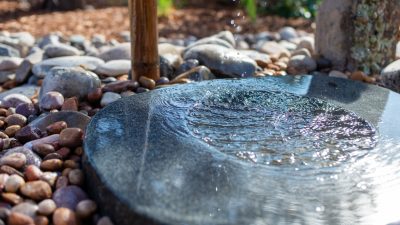
Rounded river rocks of two to six inches work well for drainage channels and decorative dry creek beds.
These look natural but shift easily, so always pair them with edging or larger anchor stones.
Crushed Stone or Decomposed Granite
Use these as base layers and compacted surfaces or underneath larger rocks to create a stable foundation.
Boulders
If you need to break the water flow, opt for boulders that are 12 inches or larger. Place them strategically to stabilize slopes and prevent water from gaining speed.
Other erosion control rocks and stones you can use
- Cobblestones allow water and roots to move through the soil and are a good option for drainage-focused designs or gabion structures.
- Porous gravel is also a good option for erosion control because it helps retain soil while allowing water to filter through.
- Non-absorbent stones like dense granite or clay-based materials work well in terraces and retaining edges.
- Large, irregular stones, often called riprap, are especially useful on steeper slopes because, due to their size, they cannot be pushed downhill by fast-moving water.
What To Avoid
Do not use small gravel alone; it will move downhill quickly.
How Rocks and Gravel Help Prevent Erosion
When properly installed, rocks:
- Absorb rainfall and prevent soil displacement.
- Control water flow and direct runoff into drainage paths.
- Hold soil in place, stabilizing slopes.
- Improve water infiltration by allowing moisture to pass through gaps.
- When properly layered and anchored, maintain long-term stability.
Why Erosion Happens in Yards and Landscapes
Erosion starts when soil loses its grip. This can happen due to heavy rain and wind, fast-moving runoff, or a lack of root structure to hold everything together.
In Santa Fe, this process presents an even bigger challenge due to the combination of specific environmental factors.
These include intense, short rainstorms; dry, compacted soil that resists absorption; sparse vegetation that fails to anchor soil, and sloped terrains that increase water speed.
As water flows downhill, it gathers force and carries loose soil with it. Over time, erosion:
- Creates visible channels.
- Exposes plant roots.
- Weakens the structure of your landscape.
Landscaping Ideas for Slopes and Drainage Areas
Now that you know how to place rocks on a slope to stop erosion, you should also think about how to control water.
Build a Dry Creek Bed
A dry creek bed is one of the most effective ways to manage runoff on a slope.
- Dig a shallow, winding channel following the natural path of water flow.
- Line it with landscape fabric.
- Add a base layer of gravel, then add river rock and larger stones.
- Place larger rocks along the edges so soil doesn’t spread.
Use Terracing
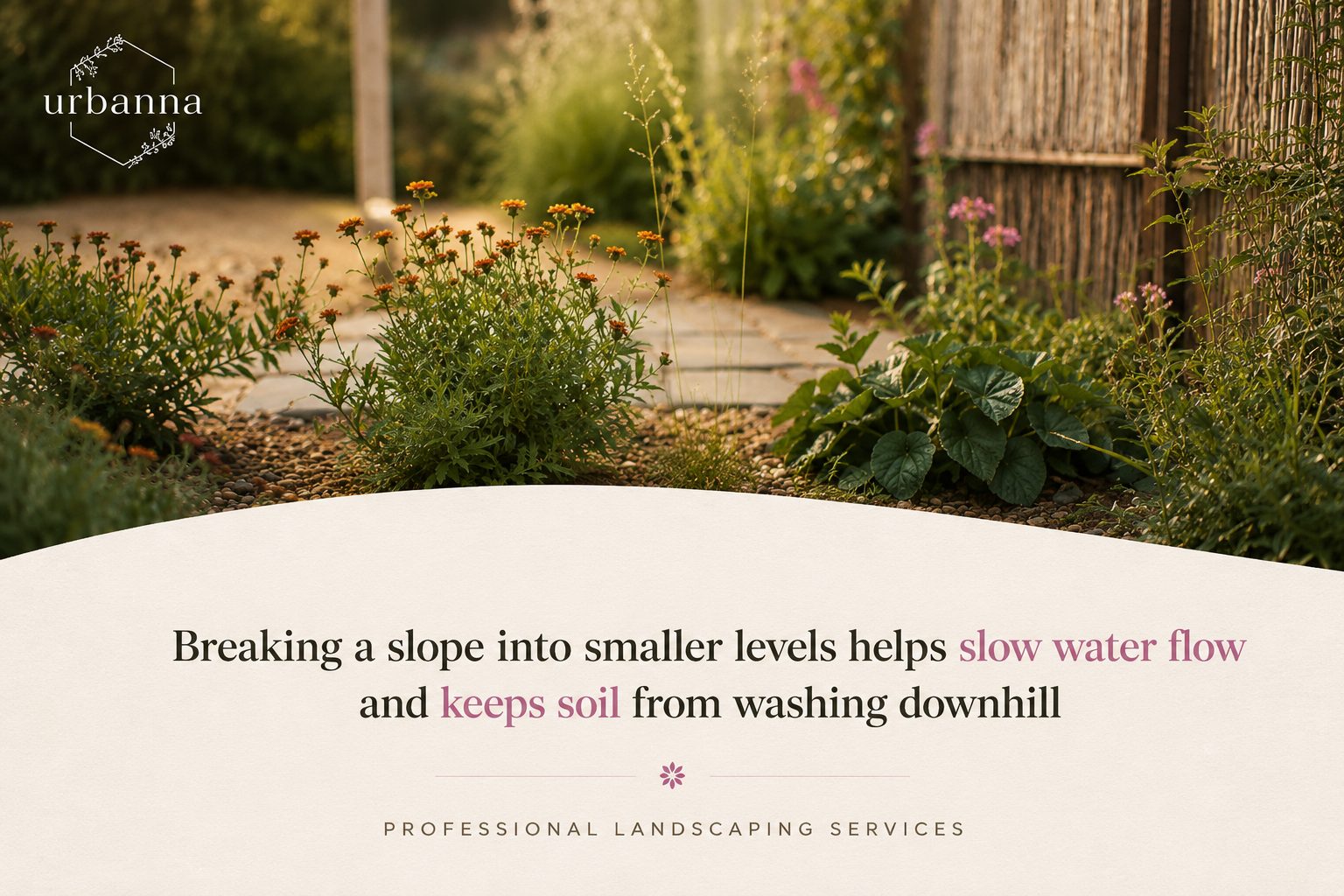
If you have long, continuous slopes, terracing will help you reduce water speed.
- Make small, level steps from stone, timber, or compacted soil.
- Use erosion rocks or retaining edges at each level.
- Backfill with compacted soil and gravel for stability.
Install Rock Borders and Edging
Without edging, gravel will eventually move downhill; it’s just a matter of time. Borders will help keep the layout intact.
- Use larger stones or cobblestones to create borders along pathways and beds.
- Anchor edging at least a few inches into the soil.
- Combine with gravel or smaller erosion stone inside the borders.
Maintenance Tips for Rock and Gravel Landscapes
Even a well-built system isn’t set-and-forget. Over time, water, gravity, and debris will test it, and small issues can turn into bigger ones if ignored.
Inspect After Heavy Rainfall
Check your landscape after storms, looking for displaced rocks or exposed soil.
Reposition materials before damage spreads to prevent larger failures.
Reinforce Areas Showing Movement
If rocks begin shifting, adjust the structure by adding large erosion rocks to stabilize weak spots. Then, recompact the base layer where settling happened.
Remove Sediment Build-Up
As seasons pass, fine soil starts settling between the rocks, slowly changing how water moves.
To maintain efficient erosion control and keep your drainage system functioning, clear excess dirt from drainage channels and rock beds.
Control Weeds Before They Spread
Weeds might seem harmless at first, but as roots spread, they can start disturbing the layers underneath.
Check edges and gaps where they typically grow and pull them out before roots expand.
Work With Urbanna Landscaping To Find the Right Erosion Control Solution
In areas like Santa Fe, where short, intense storms hit hard and fast, a one-size-fits-all approach rarely works.
That’s why Urbanna Landscaping builds custom erosion control systems based on how water moves across your property.
We don’t rely on generic fixes. We assess your slope, drainage flow, and soil stability to choose and build an efficient, long-term solution.
Our team can help you:
- Choose the right combination of erosion rocks, gravel, and base materials for your specific property.
- Build dry creek beds and drainage channels that direct water away from vulnerable areas.
- Add native plants to strengthen erosion control naturally.
- Construct terraces, retaining walls, and rock features that are both attractive and functional.
- Guide you about how to place rocks on a slope to stop erosion if you’ve decided to do it alone.
Contact our team to get a customized plan. It will show how to place rocks on your slope to stop erosion and protect your landscape for years to come.
How To Place Rocks on a Slope To Stop Erosion: FAQs
How do I place rocks on a slope to stop erosion effectively?
Most projects begin with reshaping the slope and building a solid base, but the exact approach can vary quite a bit depending on the conditions. Talk to our experts at Urbanna Landscaping to choose the best option for your situation.
What are the best rocks for erosion control?
Angular rocks and larger stones provide the best stability. For optimum results, combine rocks of different sizes.
Do erosion rocks require maintenance?
Yes. Make sure to inspect them regularly and reposition materials after heavy rain.
Can I combine plants with erosion rock?
Absolutely. Native plants like Big Sage, Winterfat, Agastache, Apache Plume, and Blue Grama grass improve long-term slope stability and reduce erosion.

- Dry Creek Bed for Drainage: How It Works and When To Use It - July 28, 2026
- Purposeful Landscaping: How To Place Rocks on a Slope To Stop Erosion - May 14, 2026