In Santa Fe, the way you water your plants decides what survives. Rain is scarce, the sun is strong, and much of a sprinkler’s water is lost to the sun and wind before it reaches the roots.
If you want a yard that stays healthy through the dry months without constant watering, a drip irrigation system is worth considering.
This guide covers how a drip system works, how a good one is designed, and why professional installation and care make the difference.
Main Components of a Drip Irrigation System and What They Do
Every drip irrigation system represents a short chain of parts, which move water from the house out to your plants.
- The connection point is where the system taps into your water, usually a hose bib or a valve off the main line.
- The backflow preventer stops irrigation water from flowing back into your drinking water.
- The pressure regulator lowers your household water pressure, so the tubes don’t burst.
- The filter cleans grit out of the water, so it does not clog the tiny openings in the emitters. This is key for Santa Fe’s hard, mineral-heavy water because buildup can easily block the filter.
- The supply tubing carries water from the connection out across your beds to each plant.
- The emitters release water slowly at the roots, a few gallons an hour. For sloped lots that are common in Santa Fe, pressure-compensating emitters keep every plant getting the same amount of water.
- The controller turns watering for each zone on and off. Smart versions adjust to the weather, so you are not watering right after a heavy monsoon downpour.
Drip Irrigation Design: Factors To Consider
This is the part where most systems succeed or fail.
A generic layout across every bed can make some plants drown while others remain thirsty.
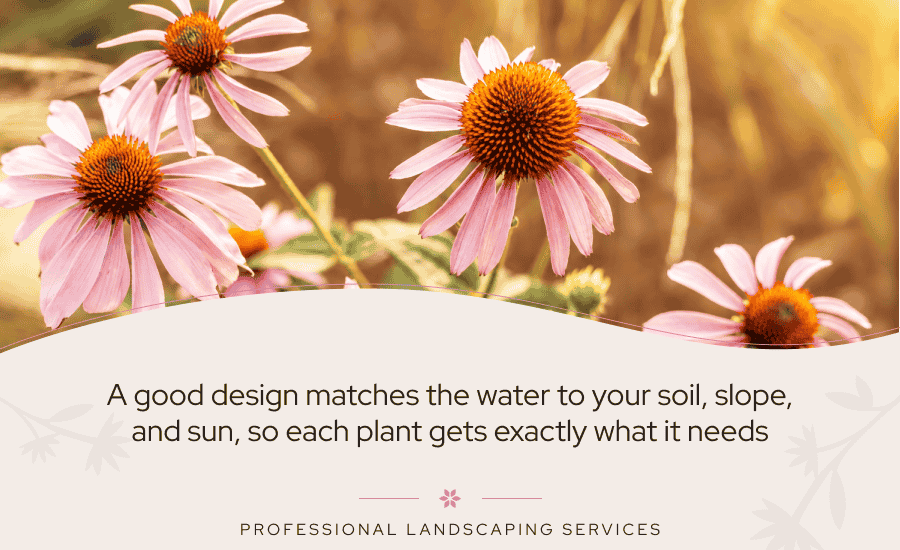
A custom design shaped around your home and terrain matches the zones and emitters to your plants, soil, sun, and slope, so each plant gets what it needs.
Grouping Plants by Water Need
Plants that drink alike go into the same area, a practice called hydrozoning.
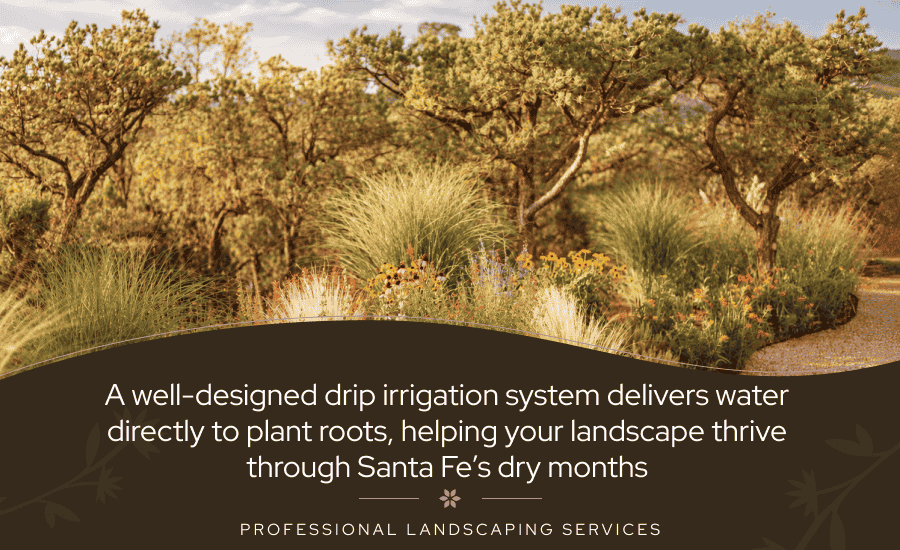
For a Santa Fe landscape, this means putting desert landscape plants together, for example, Penstemon, Agastache, Blue Grama grass, Winterfat, and Prickly pear.
A young tree or some perennials need more water; they need to be placed in a separate zone with its own schedule.
A seasoned designer matches each plant to the right zone by species and age to ensure they are watered by the right schedule.
Matching Emitters to Santa Fe Soil and Slope
Santa Fe soil can differ even within a single yard. In some of its parts, you can have decomposed granite; in others, heavy, slow clay.
Gritty, fast-draining ground needs emitters that are set right at the roots, so the water reaches them before it sinks away.
Clay drains more slowly; here you need low-flow emitters that work longer to make the water soak in.
If you have a sloped yard, the water has to reach both the top plants and the ones at the bottom.
A professional landscaping agency that knows this terrain builds that in from the start, before the signs of a bad setup show up seasons later.
Planning Around Sun and Elevation
A south-facing bed against an adobe wall bakes in the high-altitude sun and dries fast. A shaded north side holds moisture far longer.
Putting those two in the same zone means one of them is watered wrong every single cycle.
Why Opt for Professional Drip Irrigation Installation
Maybe you’ve wondered how to install drip irrigation yourself.
While it’s doable in a single bed, with some time and patience, a full property with a mix of soils, slopes, and plants poses considerable challenges.
With professional landscapers, you get:
- A design made for your property: Zones and emitters match the specific conditions and plants on your property.
- Fewer clogs and leaks: Experts choose the right filter and fittings for Santa Fe’s hard water, so your drip irrigation system is protected against blockages and failures.
- Even watering on slopes: Correct zoning and pressure-compensating emitters give every plant the amount of water they need, regardless of their position.
- A system that’s ready for winter: Pros drain the system before the first hard freeze, so the lines don’t crack, needing replacement in spring.
- Less water wasted: A professionally designed and installed drip irrigation system provides plants with the exact amount of water, reducing water bills.
- One plan for the whole yard: The drip lines are laid out with other landscaping elements, such as a flagstone patio, fireplace, retaining walls, and beds without the need for trenching back through finished work later.
Drip Irrigation Maintenance and Troubleshooting
A drip irrigation system requires care that’s specific to Santa Fe’s climate.
Because the water here is hard and mineral-heavy, the filter clogs quickly and needs regular cleaning.
Emitters block with buildup and get swapped out more often than they would elsewhere. They also need to be shifted away from the base to follow the spreading roots as the plants grow.
Winterizing is key: the first hard freeze arrives early at 7,000 feet, so it’s crucial that the lines and backflow device are drained on time to prevent expansion and damage.
Staying on top of all this is much easier when the team that designed the system also looks after it.
They already know how your zones are structured, which emitters feed the plants, and where the system runs under hardscape.
Design Your Drip Irrigation System With Urbanna
For more than 24 years, Urbanna Landscaping has designed, built, and maintained outdoor spaces across Santa Fe.
Backed by deep knowledge of the soil, elevation, and seasonal changes, we plan the plants and the irrigation together, so they work as one system.
We group the zones by each plant’s water need, size the emitters for your soil, and set the watering schedule to the Santa Fe seasons.
Because we also handle xeriscaping, hardscaping, and maintenance in house, the system is built to fit the whole landscape, not just the part of your yard where you need irrigation.
With Urbanna, the irrigation is invisible, and the landscape feels like it was always meant for your home and this corner of Santa Fe.
Drip Irrigation Systems: FAQs
How long does a drip irrigation system last?
The tubing lasts roughly 10 to 15 years if you:
- Keep it out of direct sun.
- Protect it with mulch or gravel.
- Replace emitters as they clog or wear.
- Do proper winterizing.
Urbanna Landscaping can do all that for you, so you enjoy a fresh, well-watered yard without the hassle.
Why do drip irrigation systems fail?
Most failures are caused by clogged emitters, cracked fittings, or split tubing due to improper care and water and climate challenges. Working with a professional agency ensures your drip irrigation system is designed and maintained to withstand them.
What time of day should drip irrigation run?
Early morning is best because it allows water to soak your plants and gives them enough time to dry before the day’s heat sets in.

- Yard Drainage Solutions: How To Fix Standing Water and Runoff - October 15, 2026
- Drip Irrigation Systems: A Santa Fe Installation, Design & Maintenance Guide - October 15, 2026
- Landscape Lighting Cost: Price Breakdown and Budgeting Tips - July 28, 2026