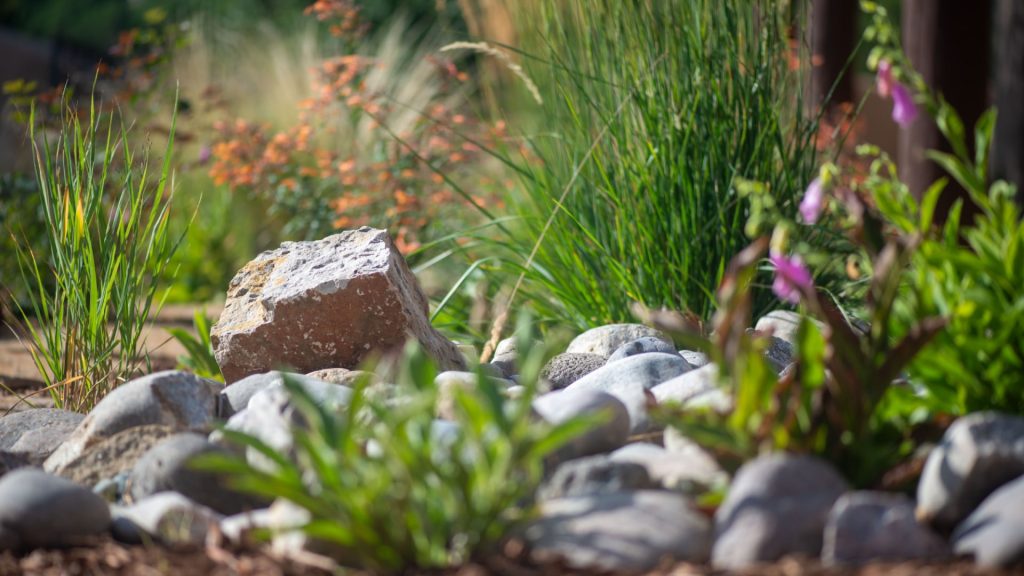
Imagine stepping into your yard to enjoy a flagstone path weaving through clusters of yucca, agave and prickly pear, their unique shapes casting soft shadows under the sun.
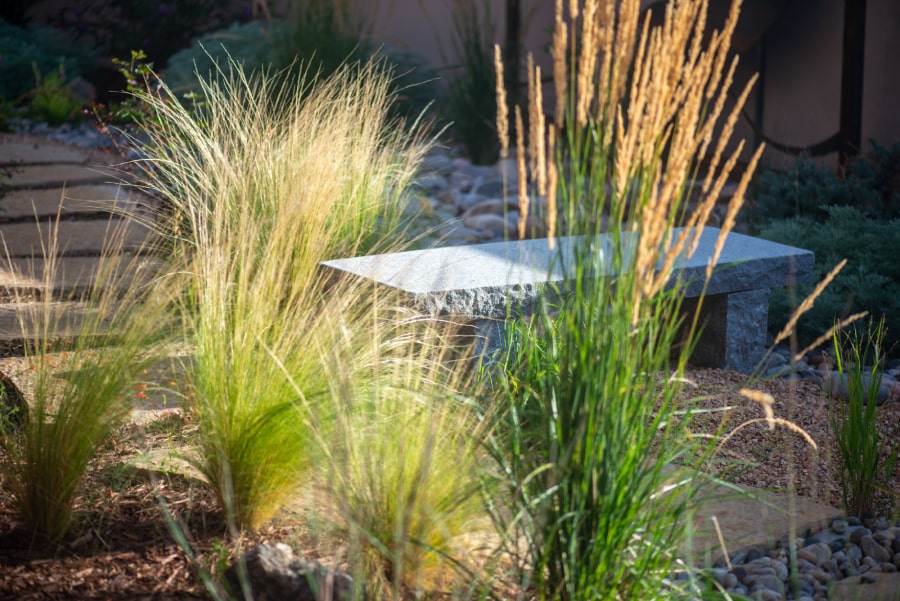
Or reading a book on your favorite stone bench surrounded by vibrant desert marigolds and stately saguaros.
Desert landscape plants can bring a unique charm to any garden, creating an inviting and serene space.
Want to know more? We’ll share the benefits of using low-maintenance desert plants, best practices to enjoy rich growth and how Urbanna Landscaping can help transform your outdoor space into a desert oasis.
Succulents, Cacti, and Sculptural Desert Plants
Think of succulents and cacti as the framework of desert planting. They have bold, clean forms that add charm to your yard or garden year-round, asking very little in return.
Yucca
Yucca’s skyward, spiky leaves catch the eye and create striking contrast against ornamental grasses and lower plants.
Choose a full-sun spot, plant in well-draining sandy or rocky soil, water sparingly, and remove spent flowers to maintain its form.
Agave
With its silvery-blue hue and sharp-edged leaves, agave makes a natural focal point against stone or stucco.
The key is the right species selection: Parry’s agave and New Mexico agave are well-suited for this climate while many nursery agaves are not.
Plant in dry, well-drained soil, position in full sun, water lightly and let the soil dry completely, plus remove damaged leaves to keep its silhouette clean.
Prickly Pear
The green pads and bright yellow, red, or pink flowers of prickly pear bring a playful energy and character to your garden, and its edible fruit is a genuine desert bonus.
A New Mexico native, prickly pear is as tough as the ground it grows in. Plant in well-draining sandy soil, water infrequently, and prune pads to control its sprawling shape.
Desert Shrubs, Grasses, and Groundcovers
Shrubs and grasses give your desert landscape movement, filling your space and shifting with the wind.
Blue Grama
This graceful native grass adds gentle texture to your drought-tolerant landscape, creating a peaceful, meadow-like vibe that softens the desert scenery.
Plant in well-draining soil, water occasionally while establishing, then reduce frequency, and trim seed heads for a cleaner look.
Big Sage
Silvery, aromatic foliage and small yellow flowers in late summer add a quiet, rustic presence that blends with the surrounding country.
It thrives in sandy or rocky soil and full sun. Prune in early spring.
Winterfat
Prized for its soft, silvery-white seed heads that glow in the light, Winterfat adds a distinctive winter texture few plants can match.
Choose clay or chalky soils and a full-sun location. Trim lightly in early spring for denser growth.
For structure and shade, choose Santa Fe’s own native trees, piñon pine, one-seed juniper, and Gambel oak.
Flowering Desert Plants for Landscaping Color and Curb Appeal
Flowering desert plants for landscaping make a front yard feel alive from the moment you step in.
Penstemon
Tall spires of red, pink, or purple flowers bring color and energy, while the tubular blooms are a magnet for hummingbirds.
Plant in well-draining soil with a little organic matter, give it full sun, water occasionally in the growing season, and prune spent flowers to extend bloom.
Desert Marigold
Create cheer in your garden with the sunny, yellow blooms of desert marigold. Its delicate petals flutter in the breeze, adding a light, joyful touch to your desert landscape.
Plant in sandy soil, choose a sunny spot, and trim spent blooms to keep it flowering.
Agastache
Create a symphony of color with Agastache’s purple, pink, or orange flowers. Known as hummingbird mint, this fragrant desert beauty attracts pollinators and adds a peaceful dynamic to your garden.
Agastache likes rocky or sandy soil, full sun, and moderate watering.
Benefits of Using Desert Landscape Plants in Your Garden
Apart from visual appeal, desert landscape plants offer numerous benefits, from reducing water usage to cost savings.
Water Conservation
Water is a precious resource in drier regions like Santa Fe. Desert landscape plants store water in their leaves, stems, or roots, minimizing the need for frequent watering and supporting a more sustainable approach to gardening.
Low Maintenance
Desert plants are slow-growing and naturally resilient to extreme temperatures and poor soil conditions.
They are less susceptible to pests and diseases compared to other plants and need little pruning, fertilizing, or attention, making them ideal for homeowners who want a beautiful garden without constant upkeep.
Cost Savings on Irrigation
Using drought-tolerant desert plants in your backyard reduces or eliminates the need for costly traditional irrigation systems.
Instead, you can use drip irrigation methods which lower your water bills and reduce maintenance costs.
How To Choose the Right Plants for Your Yard
When picking desert plants for landscaping, consider a few key factors.
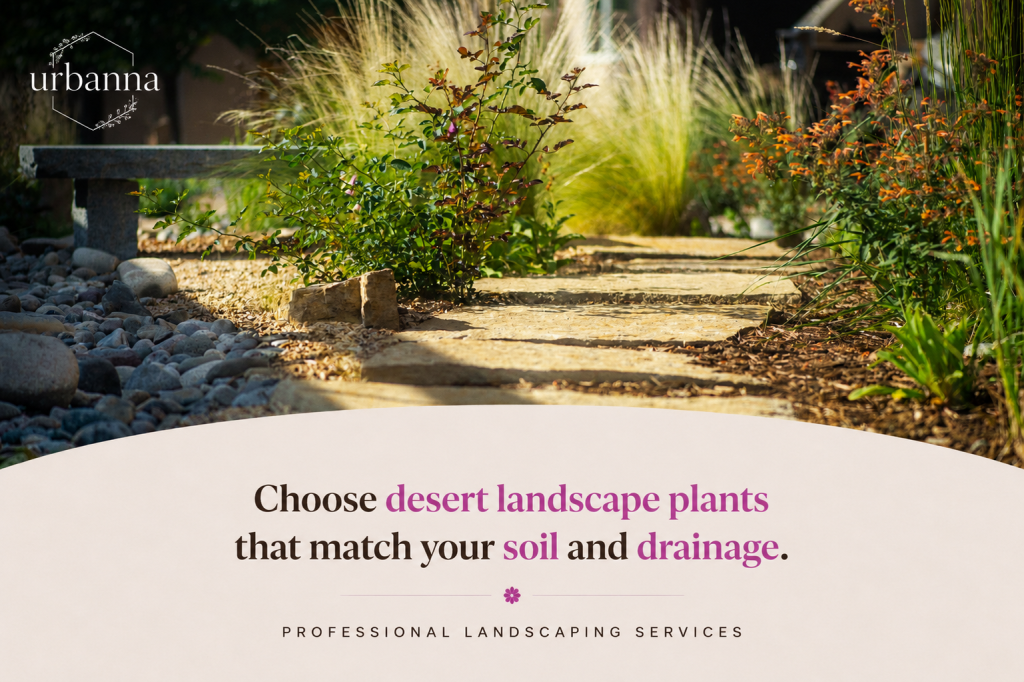
- Choose desert landscape plants that match your soil and drainage. Santa Fe soils are alkaline and gritty, swinging from fast decomposed granite to slow, heavy clay within a single yard. This means the same plant can thrive in one bed and struggle ten feet away.
- Group plants by water need and mature size. Place thirstier flowering perennials together and give a sculptural agave enough room to grow.
- Take into account the architecture. Small desert plants and grouped containers near an entry do different work than a bold specimen against a stone wall.
Common Desert Planting Mistakes To Avoid
When desert planting fails, the reason is usually simple. The most common one is the wrong plant for the zone: a plant that lives well in warmer places, may survive the summer but die during the first hard freeze.
Water is the next one. These plants need very little water. A deep soak now and then is enough; too much water can kill them.
The other two problems are easy to miss. Heavy, slow-draining soil can rot roots, and too much fertilizer or pruning stresses plants that thrive on lean soil.
None of this is hard to fix once you know it. However, if you don’t know much about Santa Fe soil, elevation, and seasons, you can easily miss the signs.
A professional landscaping team gets all of it right from the start: the plant, where it goes, and how it’s watered and fed.
Choose the Right Desert Landscape Plants With Urbanna
Most people start with plants they’ve seen and liked. But do they belong in that spot in your yard? Will they still look right in five years?
Our team at Urbanna Landscaping has spent 24 years planting gardens across Santa Fe and has the answers to all your questions.
We know what grows well here and what won’t make it through a cold snap. We’ll help you pick low-maintenance desert plants you love, put them where they’ll thrive, and arrange them, so your yard looks vivid and colorful season after season.
Desert Plants: FAQs
How can I protect desert plants from frost?
Use frost cloths or blankets during cold spells or add mulch around the base of the plants to provide much-needed insulation.
Can I grow desert plants in containers?
Yes, that’s possible. Use containers with drainage holes and well-draining soil. Water plants more frequently as they have less soil and may be more exposed to direct sunlight.
What is the best time of year to plant desert landscape plants?
Spring or fall are the best seasons because plants have enough time to establish their roots before the heat of summer or the cold of winter.

- Tara Josub, Founder & Lead Landscape Designer at Urbanna - October 20, 2026
- Yard Drainage Solutions: How To Fix Standing Water and Runoff - October 15, 2026
- Drip Irrigation Systems: A Santa Fe Installation, Design & Maintenance Guide - October 15, 2026