Desert Landscape Ideas: Key Takeaways
- Desert landscaping uses less water and less upkeep than a traditional lawn and holds up better against Santa Fe’s sun, cold winters, and heavy rain
- Desert landscape ideas for modern front yards include clean lines, plants as a focal point, and grouped containers near the entry
- Backyard layout depends on size: vertical elements and containers work with small yards, open pathways are a great choice for large ones
- Most mistakes, like overwatering or skipping soil prep can be avoided if you work with a professional landscaping agency
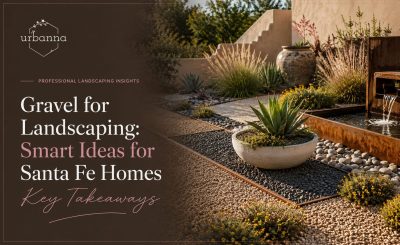
A gravel path leading to a shaded pergola. A dry creek bed curving past a bed of agave and yucca. This is what desert landscaping looks like in Santa Fe.
Want to try one of these desert landscape ideas in your own outdoor space? Here’s what this guide covers:
- Why a desert landscape design makes sense for Santa Fe’s climate
- Modern landscape ideas for front yards
- Drought-tolerant plants that hold up at this elevation
- Rock, gravel, and river rock design choices
- Backyard and outdoor living ideas
- Common mistakes to avoi
Why Choose a Desert Landscape Design
Desert landscaping, or xeriscaping, is a garden design style used in arid and semi-arid environments.
With a focus on water conservation and low maintenance, it uses drought-tolerant plants and efficient irrigation systems to create a sustainable and aesthetically pleasing landscape.
Santa Fe’s climate is ideal for desert landscaping. Summer comes with intense sun, winter brings hard freezes, rain is fast and heavy, meaning a traditional lawn here is fighting the climate at every turn.
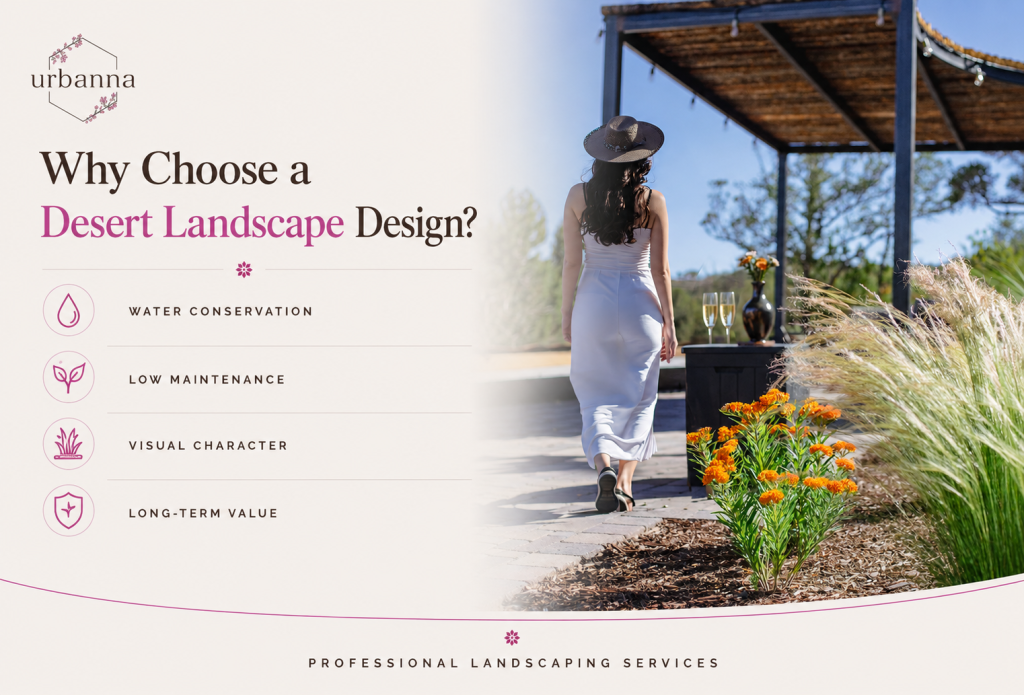
Here’s what a well-designed desert landscape offers homeowners exploring desert landscape ideas for their property.
Water Conservation
Traditional lawns are not a practical choice in areas where rain can be rare. Desert landscaping drastically reduces water use, helping protect local water resources.
Low Maintenance
Desert landscaping uses plants that are well-adapted to harsh conditions and require minimal care, such as succulents, cacti, and native shrubs.
They don’t need mowing, watering, or fertilizing. In addition, mulches and ground covers help suppress weeds, further reducing maintenance tasks.
The result is a landscape that always looks the way it was built, whether you’re hosting friends on your patio or unwinding after a long week.
Visual Character
Where a lawn offers one texture and one shade of green, a desert landscape uses contrast.
You see it in the silver-green of agave against warm gravel, the vertical line of a yucca against a low adobe wall, or the shadow a pergola casts across flagstone at different times of day.
Together, they’re part of what gives the space its rhythm and its connection to the high-desert terrain around it.
Long-Term Value
Drought-tolerant plants and quality hardscape materials cost more to install than sod and sprinklers, but they don’t require frequent replacement and repair.
A landscape built with the right stone, drainage, and plant palette for this elevation continues to boost your property’s value for years to come.
Modern Desert Front Yard Ideas
A front yard sets the tone for the whole property, and it’s often where simple desert landscape ideas make the biggest first impression.
It’s the first thing guests see as they walk up to the door, and the first thing that greets you after a long day, so it’s worth designing with that moment in mind.
Geometric Walkways and Clean Lines
Bold plant shapes bring a fresh, modern edge without competing with the house itself.
A straight or gently curved gravel path with steel or stone edges leads the eye straight to the front door, catching the late afternoon light.
Low path lighting along the edges extends that same effect after dark, so the entrance feels cozy and welcoming.
Plants as Focal Points
A single, well-placed agave or a columnar cactus set against a stone backdrop gives the eye a clear point of focus and reinforces the modern architectural feel.
Container Gardening
Containers are among the most flexible desert landscape ideas, accommodating a range of plants, from small succulents and herbs to larger shrubs, allowing for easy movement and rearrangement.
Clay pots add a classic touch against adobe or stucco. Larger metal or ceramic containers suit a cleaner, more contemporary facade.
Grouping containers at varied heights near your entry turns a plain doorway into a small, layered garden moment before you even step inside.
Drought-Tolerant Plants for Desert Landscaping
Dreaming of a colorful retreat that adds unique character to your yard? Many desert landscape ideas use drought-tolerant plants to bring color and texture to a Santa Fe yard.
Craft flower beds with desert marigold, blanket flower, and penstemon.
Desert marigolds will dot your garden with bursts of yellow, while blanket flowers will bring a fiery contrast of red and orange, like a summer sunset in bloom.
Add the pink, purple, and red tubular flowers of penstemon, and you’ll get an elegant landscape that turns heads.
Rock, Gravel, and River Rock Design Ideas
Rock and gravel beds can make beautiful pathways or decorative elements. They can be used for desert landscape ideas that replace traditional lawn areas with practical hardscaping.
When used around plants, they provide a clean and modern look.
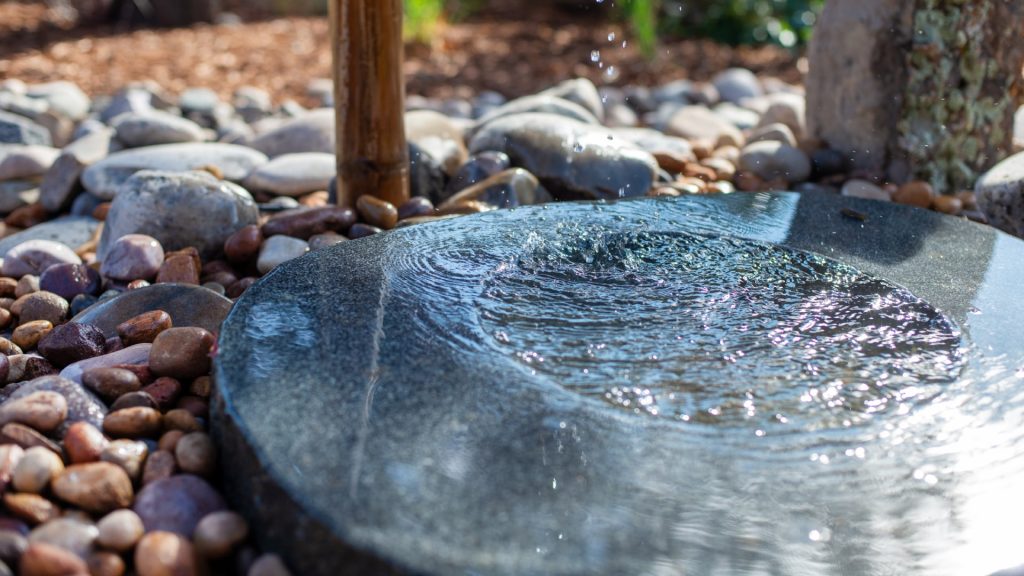
One creative option is to mix rocks, gravel, and pebbles of different sizes. Beyond the practical drainage benefits, river rock introduces a sense of motion, almost like water, that’s especially effective in a climate where water is scarce.
The right choice of gravel ties the hardscape to your home’s materials.
Crushed granite goes well with adobe and stucco walls; pea gravel looks clean against a more contemporary stucco or wood facade, while flagstone chips or river cobble add weight and texture near a stone foundation or retaining wall.
Add decorative boulders to catch the eye, and put a finishing touch with metal, plastic, or stone edging to keep rocks in place.
Desert Landscape Ideas for Backyards and Outdoor Living
A backyard desert landscape can become the stage of all those moments your family enjoys: dining, entertaining, and quiet mornings with coffee.
The right desert landscape ideas can turn these activities into a space designed around your daily routine and the way you spend time outdoors.
Vertical Elements
For small backyards, use trellises and container gardens that maximize space and create a lush, layered look.
For larger gardens, opt for open pathways, sculptures, and combinations of plants that enhance the visual impact and create diverse garden areas.
Shade Structures
One of the most practical desert landscape ideas, shade structures offer relief from the intense heat and sun rays.
Choose a pergola if you want to create a stylish semi-shaded outdoor living area or a large, shade sail if you need to cover a spacious patio or dining area.
Go for durable materials like steel that can withstand the harsh New Mexico climate, resist rust and corrosion, and provide long-lasting support and protection from the sun.
For additional shade and greenery, plant climbing plants like wisteria or trumpet vine.
Hardscaping That Ties the Space Together
Hardscape elements like a flagstone patio, an outdoor fireplace, retaining walls, or a dry creek bed for drainage, give a backyard structure that plants alone can’t provide.
These features work best when they’re planned together rather than added one at a time, so every element complements the others.
Common Desert Landscaping Mistakes To Avoid
A few recurring mistakes can ruin the effective desert landscape you were trying to build.
Overwatering
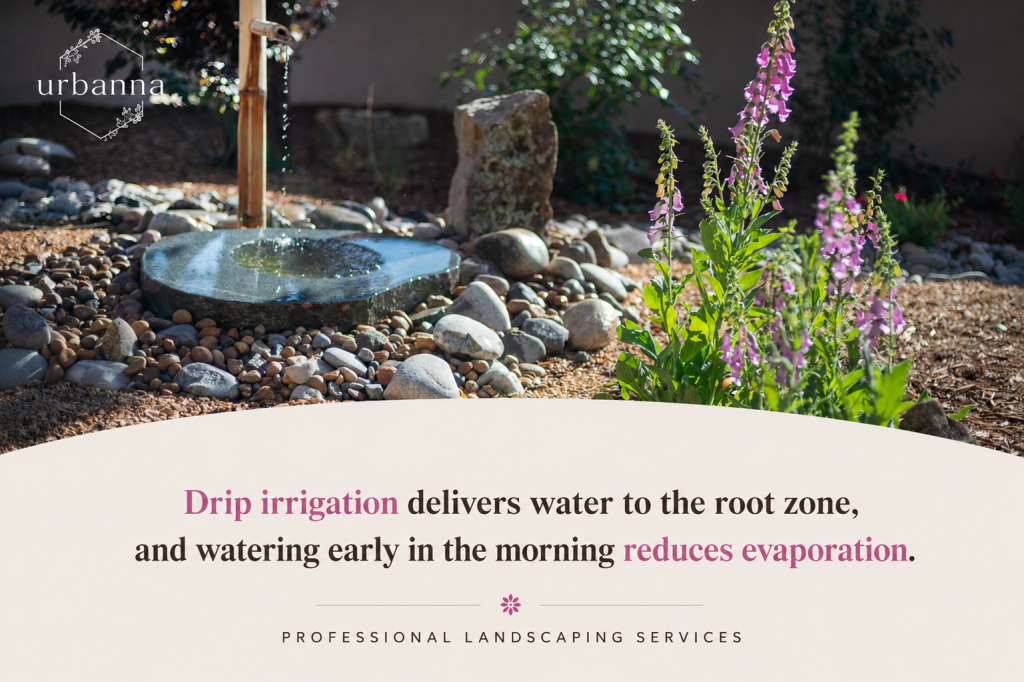
Desert plants need infrequent, deep watering. Drip irrigation delivers water to the root zone, and watering early in the morning reduces evaporation.
Over-pruning
Removing dead leaves helps air circulation, but aggressive shaping stresses plants and reduces their resilience.
Skipping Soil Preparation
Santa Fe’s soils vary from fast-draining to dense and slow-draining. Test pH and, if needed, add organic matter, sand, or gravel.
Fertilizing Too Heavily
Most desert plants grow in low-nutrient soils. A light spring application is usually enough.
Neglecting Hardscape Maintenance
Erosion, shifting, or debris can pose a risk for safety and impact appearance.
Most of these mistakes come down to the same root cause: decisions made without a full picture of the site.
Working with professional landscapers who know the local climate and soil from the start helps avoid them.
Design a Desert Landscape With Urbanna
For more than 24 years, Urbanna Landscaping has designed and built outdoor spaces across Santa Fe.
Our team’s knowledge of elevation, soil, and seasonal extremes shapes every recommendation we make, from what materials and plants work best for your space to how a gravel bed should be graded to handle a downpour.
From design and planning through xeriscaping, hardscaping, irrigation, lighting design, and the craftsmanship that brings it all together, we cover the full cycle of a project rather than handing each piece in isolation.
Whether you’re looking for desert landscape ideas, planning a front yard refresh, or reimagining how an entire property connects to your home architecture, we’ll work with you from the first sketch through the final detail.
FAQs About Desert Landscape Ideas
Which plants work well with desert landscape ideas in Santa Fe climate?
Plants you can use for desert landscaping include penstemon, Blue Grama grass and agave.
Is a desert landscape really low-maintenance?
Once established, a desert landscape requires far less work than a traditional lawn, although it will benefit from seasonal pruning, occasional weeding, and an irrigation system that’s set correctly for each plant.
Do desert landscapes still need irrigation?
Yes, but much less than a lawn. Most use drip irrigation, especially while plants are still establishing. Urbanna Landscaping designs each system around the specific plants and layout of your property.

- Tara Josub, Founder & Lead Landscape Designer at Urbanna - October 20, 2026
- Yard Drainage Solutions: How To Fix Standing Water and Runoff - October 15, 2026
- Drip Irrigation Systems: A Santa Fe Installation, Design & Maintenance Guide - October 15, 2026